
Fun learning ideas for Kids at Home
Learning at home doesn’t have to mean sitting at a table or turning everyday moments into formal lessons. Simple games, conversation, movement, pictures and imaginative play can all create opportunities for children to explore, communicate and learn while having fun.
Drawing on more than 30 years of hands-on experience supporting children and young adults, Ali has found that engaging activities often start with something a child already enjoys. Keep things relaxed, follow their interests and be willing to change the activity if they begin to lose interest.
Here you’ll find easy learning-through-play ideas for parents, grandparents and carers to try at home — many using things you already have, with little or no special equipment.
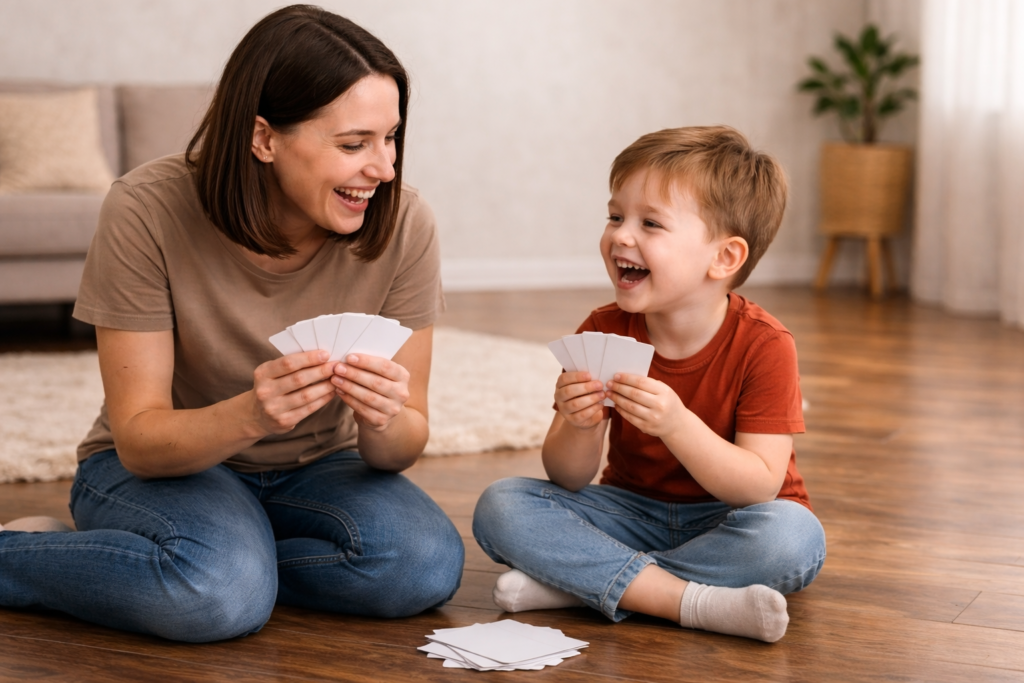
Start With What Your Child Already Enjoys
One of the easiest ways to make learning feel more inviting is to begin with something your child already enjoys. That might be animals, dinosaurs, favourite foods, music, vehicles, dressing up or a particular story.
Rather than starting with what you think they should be learning, use that interest as the doorway into the activity. A favourite animal, for example, could lead to naming and describing, making sounds and movements, sorting animals into groups or creating a silly story together.
From her own experience, Ali found that activities linked to a child’s interests and abilities were often more inviting, and that offering simple choices could help children feel more involved in what they were doing.
Quick Tip: Give Them a Choice
Try offering two or three activities, pictures or objects and let your child choose what happens next.
Ali found that a small number of clear choices often worked better than presenting too many options at once.
Turn Everyday Moments Into Learning Opportunities
Learning through play doesn’t always need a planned activity. Some of the easiest opportunities are already part of everyday family life.
While cooking, you might name ingredients, compare sizes and colours or count items together. While getting dressed, talk about clothing, colours and body parts. A walk outside can become a simple spotting game — looking for animals, vehicles, shapes, colours or things beginning with a particular sound.
Even tidying toys can become a sorting or matching game.
Ali regularly used ordinary situations in this way. Cooking, shopping, getting dressed, tidying up and going for walks could all provide natural opportunities for talking, counting, sorting, describing and making choices.
Try This: Make a Silly Mistake
Put something in the wrong group, call an object by the wrong name or pretend you’ve forgotten what comes next. Then give your child time to notice and respond.
Ali found that deliberately making a small mistake could give children a natural reason to communicate, rather than simply asking them another question.
Make Learning Active With Movement & Role Play

Learning doesn’t have to happen sitting down. Adding movement, actions and imagination can turn a simple activity into something much more playful and interactive.
Try acting out an animal, copying an action, making sounds, hunting for pictures around the room or using movements alongside songs and nursery rhymes. Everyday situations can become simple role-play games too — pretend to run a shop, prepare a meal, visit the doctor or look after a favourite toy.
Try This: Move & Find
Choose a few familiar pictures or objects and place them around the room. Ask your child to find one by its name, colour, category or description, then bring it back.
As they become familiar with the game, simply change the challenge rather than finding completely new resources.
Ali used this type of movement herself, including placing objects around a room for a child to find and match with a picture selected through a dice activity.
Use Pictures to Start Conversations & Build Vocabulary
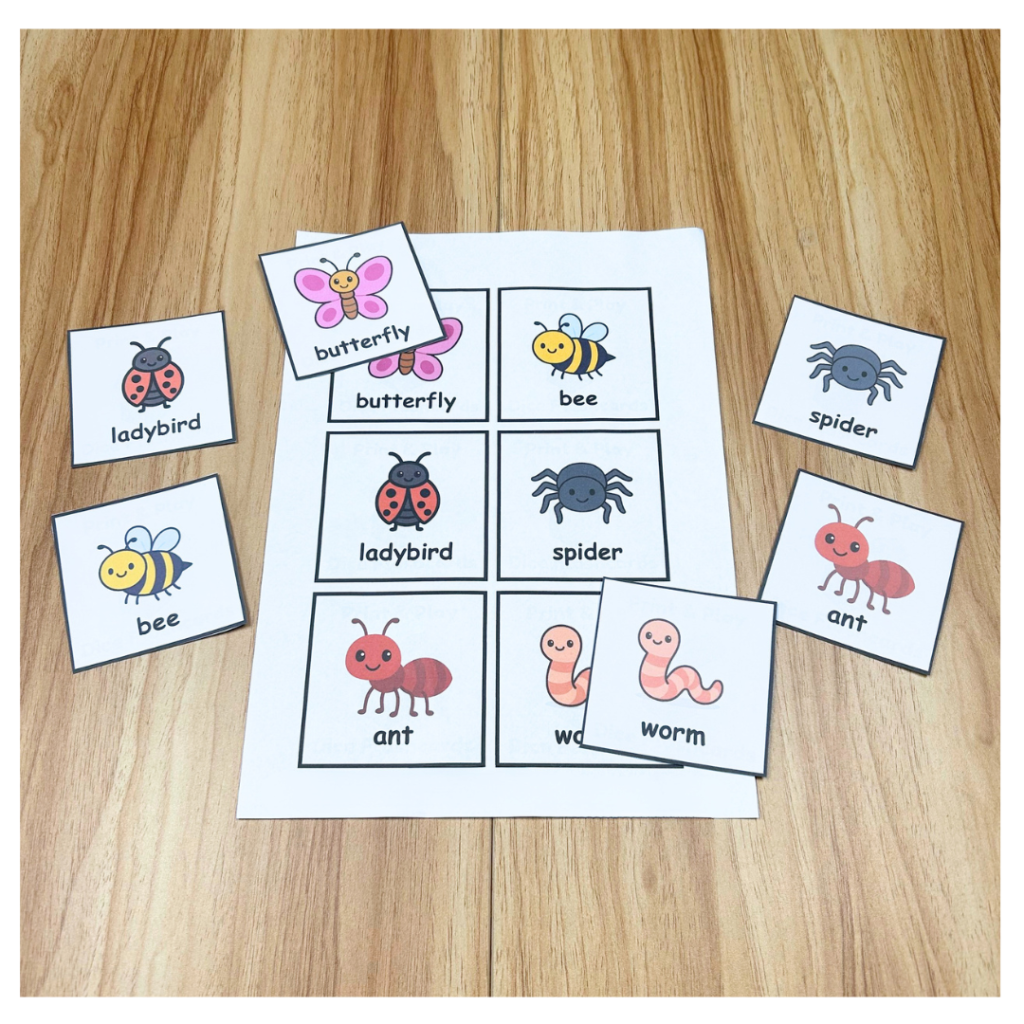
A picture can be much more than something to name. It can become the starting point for describing, questioning, storytelling, sorting, remembering and conversation.
Once your child has identified a picture, try exploring it together:
• What colour is it?
• Where might you find it?
• What does it do?
• What else belongs with it?
• Have you ever seen one?
• What do you think might happen next?
There doesn’t always need to be a “correct” destination for the conversation. A picture of a dog might lead to talking about pets, a picture of food to favourite meals, or an animal to a memory of visiting the zoo.
Ali found these spontaneous conversations particularly valuable because children were communicating about things meaningful to them, rather than simply answering a sequence of questions.
Try This: Picture Story Challenge
Choose one picture and make up the beginning of a silly story together. Add another picture and decide what happens next.
With several pictures, arrange them into a sequence, change their order and invent an entirely different story. Ali used pictures in this way to encourage children to develop their own ideas rather than always looking for a single “right” answer.
Repeat the Learning, Change the Game
Children often enjoy returning to familiar activities, but repetition doesn’t have to mean doing exactly the same thing every time.
Keep what you’re exploring the same — change how you play with it.
The same pictures could be used to:
• name things one day;
• sort them into groups another;
• play a matching or memory game;
• hide them around the room for a scavenger hunt;
• describe them without saying their name;
• act them out;
• create a story;
• or start a conversation.
Ali used this approach throughout her work. Rather than continually finding completely new resources, she would reuse familiar pictures in different ways, providing repeated opportunities to explore the same words and ideas while varying the activity.
Try This: One Picture, Five Ways
Pick just one picture.
If it’s a lion, for example:
Name it → describe it → roar like it → move like it → make up a story about it.
Tomorrow, use the same picture in a completely different game.
You don’t need an endless supply of new resources. Sometimes the simplest way to keep learning playful is to reuse what you already have in a new way.
Keep It Relaxed & Follow Their Lead
Not every activity will capture your child’s interest — and that’s okay.
If they start losing interest, try changing the pace, adding movement, offering a choice or connecting the activity to something they already enjoy. Sometimes an activity may simply be too difficult, too easy or just not right for that moment.
And if they still don’t want to join in? Don’t force it. Take a break and come back another time.
From her experience, Ali found that being flexible and responding to the individual child was more useful than rigidly sticking to a planned activity.
Give them the lead: Which picture? Which game? Cards or dice? Sitting or moving? What happens next?
Use the Cards Your Way — Then Add the Dice
Picture cards are incredibly flexible on their own. Use them for matching, sorting, memory games, choices, storytelling, conversation or many of the activities you’ve discovered on this page.
Sometimes cards on their own are actually the better choice — particularly when you want several pictures visible at once, want to create a sequence or simply want a slower-paced activity.
But adding a foam pocket dice creates a completely different way to play.
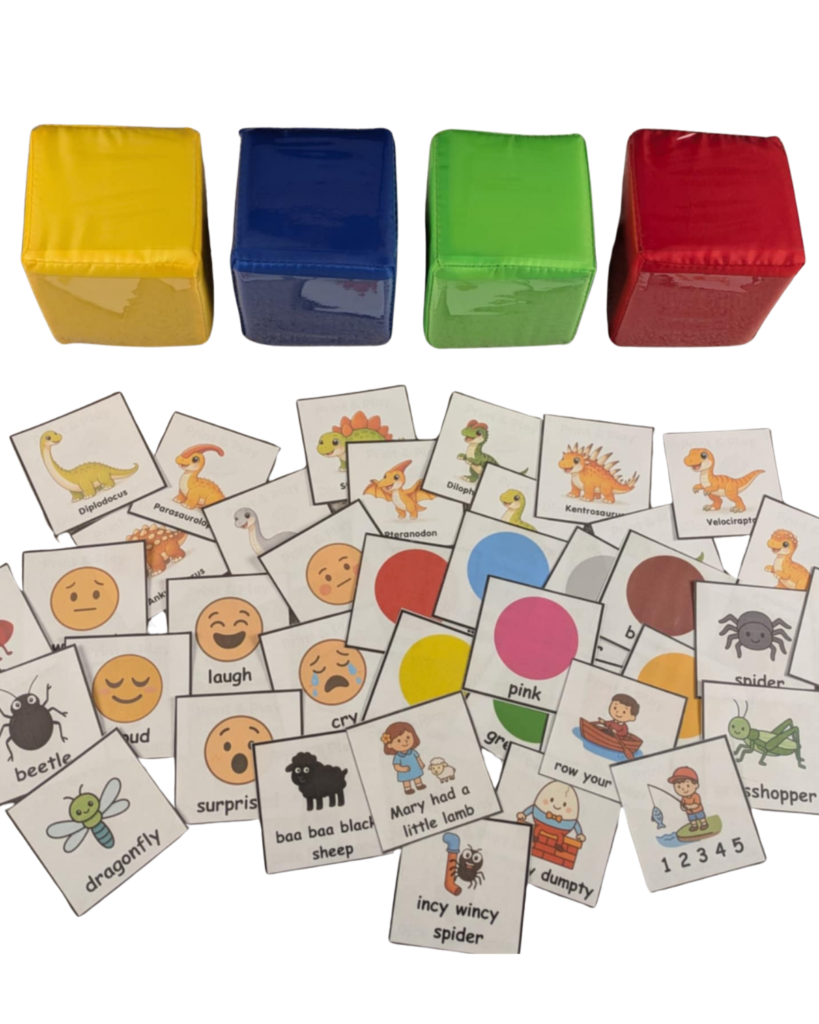
Slide six interchangeable pictures into the clear pockets, roll the dice and nobody knows which picture will appear next.
That unpredictability creates anticipation: What am I going to roll? What will I have to find, say, describe or act out next?
When Ali began using pocket dice in her work, she noticed they could make a familiar picture-card activity feel more exciting and unpredictable. The pictures hadn’t changed — the way the child interacted with them had.
Because the pictures can be swapped whenever you like, the same dice can be reused for animals today, emotions tomorrow, actions next time — or completely different games using the same cards.
The cards provide the possibilities. The dice add movement, anticipation, surprise and another reason to play again.
Want an Easy Way to Get Started?
Dice Flashcards includes 650+ printable flashcards across 40+ themed packs, covering animals, actions, emotions, colours, numbers, food, clothing, nursery rhymes and much more.
Every full pack includes 10 FREE activity ideas to help you get started, plus a FREE blank template for creating your own cards and ideas.
And you don’t need to buy anything to try the idea for yourself.
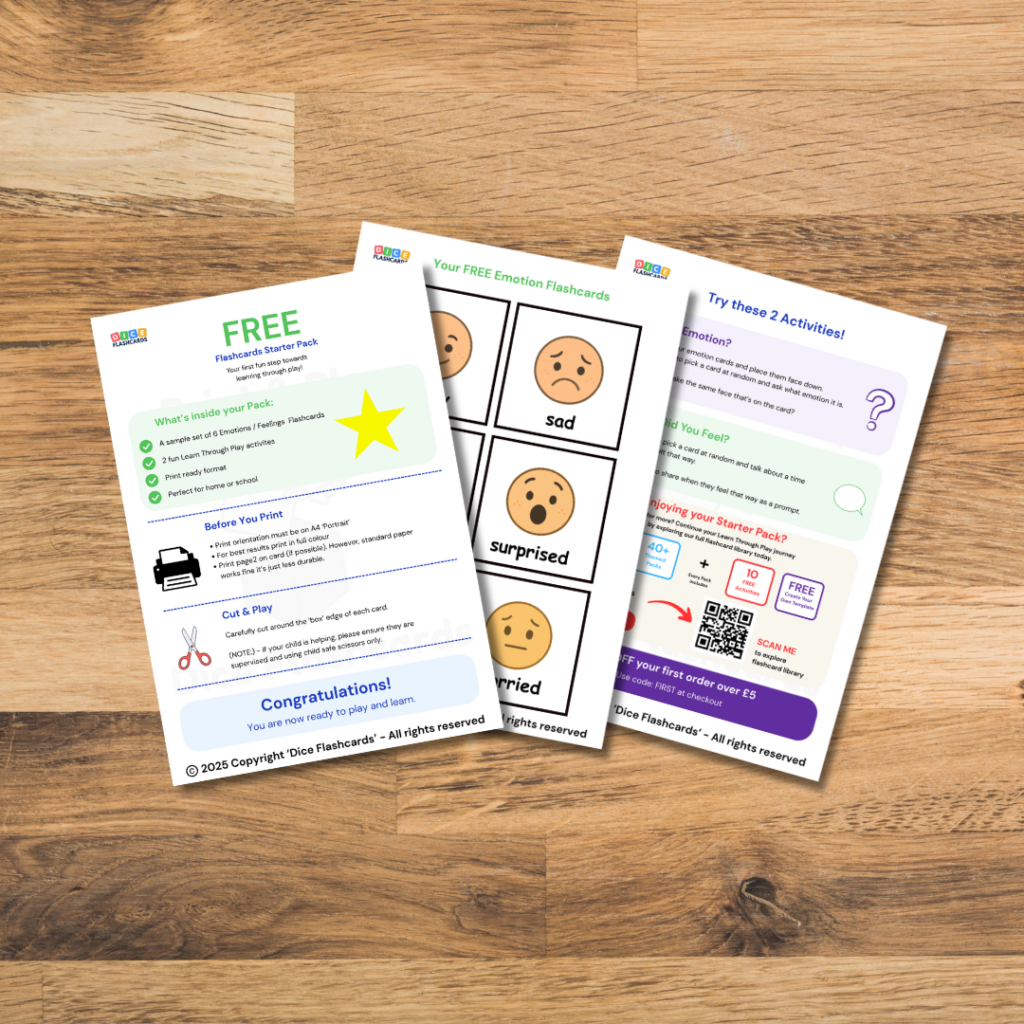
Our FREE Starter Pack includes 6 printable Emotions & Feelings flashcards plus 2 simple activity ideas, so you can download, print and start playing at home TODAY!