
How to Use Flashcards
Flashcards can be used for much more than simply showing a picture and asking someone to name it. They can become starting points for conversation, choices, matching, sorting, storytelling, movement, games and imaginative play.
Drawing on more than 30 years of hands-on experience supporting children and young adults, Ali has found that simple visual resources can be especially useful when they are adapted to the individual, introduced gradually and used in different ways rather than as a test. Familiar pictures, plenty of time to respond and following the person’s interests can all help make an activity feel more relaxed and engaging.
Whether you’re using flashcards with a child, an adult language learner or as part of a professional setting, this guide will show you simple ways to get started and how the same cards can be reused for many different activities.
The Key Idea:
Flashcards don’t have to be used in one particular way. Start simply, follow the person you’re supporting and adapt the activity around their interests and responses.
Start Simple
You don’t need a large number of flashcards to begin. Choose a small selection of clear, familiar pictures connected to something the person already knows or enjoys. This could be favourite foods, animals, everyday objects, actions or familiar routines.
Introduce the cards gradually and give plenty of time to look, think and respond. You might start by simply naming or talking about the pictures, matching them to real objects or offering a choice between two or three cards.
Ali’s experience has been that there isn’t one approach that works for everyone. If someone loses interest, simplify the activity, introduce movement, offer a choice or change how you’re using the cards rather than feeling you have to continue with the original plan.
Quick Tip:
Start with fewer cards and familiar pictures. You can always introduce more once the person becomes comfortable with the activity.
7 Simple Ways to Use Flashcards
Flashcards become much more useful when you move beyond simply asking, “What is this?” The same pictures can be used in different ways depending on the person, their interests and what you want to explore together.
Here are seven simple ways to get started.
1. Name & Talk
Choose a picture and start by naming what you can see.
From there, gently extend the conversation with simple questions such as “What colour is it?”, “Where might you find it?”, “What does it do?” or “Have you seen one before?”
There is no need to ask every question or expect a particular answer. A single picture might lead to a memory, a story or a completely different conversation — follow where it goes.
This directly reflects Ali’s experience of using pictures not just for naming vocabulary, but as starting points for describing, making connections and conversation.
Try This: Three Things
Choose one picture and see if you can find three different things to say about it — what it is, something about it, and something it reminds you of.
2. Match & Sort
Lay out a small selection of flashcards and look for ways they can be matched or grouped together. You could sort animals from food, things you wear from things you eat, colours, shapes, actions or anything else that makes sense for the pictures you’re using.
Matching doesn’t always have to mean finding two identical cards. You can match a picture to a real object, connect the cards to pictures in a favourite book, group pictures that belong together, or ask “Which one is different?”
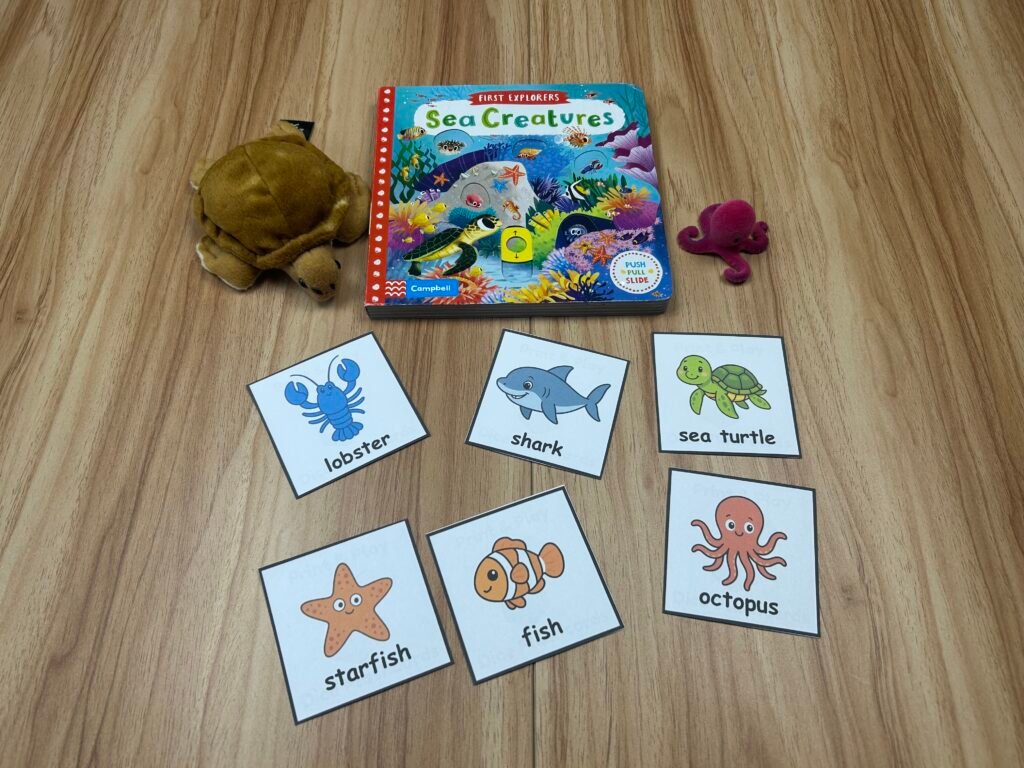
Start with just two clear groups if needed, then introduce more choices as the activity becomes familiar.
Try This: Find the Connection
Choose two different pictures and ask, “What connects these?” There may be more than one answer — and an unexpected answer can be part of the fun.
3. Give Choices
Flashcards can provide a simple visual way to offer choices. Place two or three pictures where they can be clearly seen and invite the person to choose between them.
The choice could be practical — “Which game shall we play?” or “What would you like?” — or simply part of the activity, such as choosing which animal to talk about, which action to perform or which picture should come next in a story.
Ali has found that offering a small number of choices can give the person more involvement in deciding what happens next, while keeping the activity manageable rather than presenting too many options at once.
Quick Tip: Start With Two
If choosing from lots of pictures feels overwhelming, begin with just two clear options. You can introduce more choices later if appropriate.Choose two different pictures and ask, “What connects these?” There may be more than one answer — and an unexpected answer can be part of the fun.
4. Find & Move
Flashcards don’t have to stay on a table. Place a few pictures around the room and turn the activity into something more active — find a particular card, move to it, bring it back, or perform an action connected with the picture.
For example, someone could find the elephant and move like one, find an action card and perform it, or search for a picture that matches something else in the room.
Ali has often introduced movement, actions and imitation when a stationary activity was becoming less engaging, changing how the activity feels while still using the same pictures.
Try This: Picture Hunt
Place four or five cards around the room. Call out a picture — or describe it without saying its name — and see if they can find the matching card.
5. Describe & Guess
Choose a flashcard without showing the picture and give simple clues about what is on it. You might describe its colour, shape, what it does, where you might find it or something associated with it.
For example, for an elephant you might say, “It’s an animal. It’s very big. It has a long trunk.” Take turns giving clues and guessing the picture.
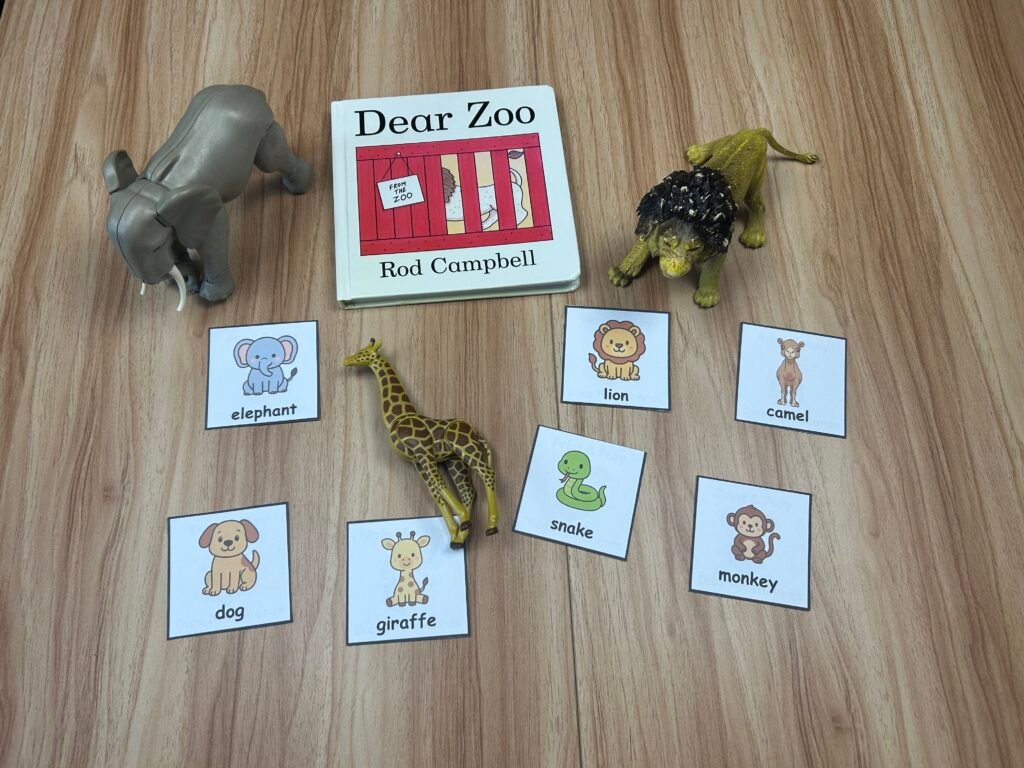
You can make this easier by laying out a small selection of possible answers, or harder by keeping all the cards hidden. The aim isn’t to catch anyone out — keep the clues playful and adapt them as you go.
Try This: Who Am I?
Choose an animal card and describe it without saying its name. Add another clue whenever needed until the picture is guessed — then swap roles.
6. Build a Story
Choose two or three flashcards and use the pictures as starting points for a story. They could become the characters, objects, actions or places that need to appear somewhere in the story.
Start simply with questions such as “Who is this?”, “Where are they?”, “What are they doing?” and “What happens next?” There doesn’t need to be a planned ending — let the story develop from the ideas that come up.
Ali has used pictures in this way as prompts for stories, imagination and conversation, rather than treating each card as something that simply needs to be named.
Try This: Add Another Card
Start a story with one picture. After a few sentences, turn over another card and find a way to bring that picture into the story. Keep adding cards for as long as you want.
7. Everyday Conversation
Flashcards can also be used simply as conversation starters, without turning the activity into a game or asking for a particular answer.
Choose a picture and talk about anything it brings to mind. A picture of a dog might lead to a conversation about a family pet, a visit to the park or an animal someone once saw. A food picture might lead to favourite meals, cooking or something you’d like to try.
Ali has found that pictures can often lead naturally into memories, experiences and wider conversations that go well beyond the original image.
Try This: Follow the Conversation
Choose a picture and ask one simple open question such as “What does this remind you of?” Then follow the conversation wherever it goes rather than working through a prepared list of questions.
Repeat the Learning, Change the Activity
You don’t always need new flashcards to create a new learning experience. The same small collection of pictures can be reused in many different ways — naming them one day, matching or sorting them another, then using them for storytelling, guessing games or movement activities.
One principle Ali has found particularly useful is to keep the underlying focus familiar while changing how it is presented. This can provide repetition without simply repeating exactly the same activity each time.
For example, the same six animal cards could be used to name the animals, make their sounds, describe them, sort them, act like them, create a story or search for them around the room.
The Key Idea:
You don’t always need more resources – sometimes you just need a different way to use the ones you already have.
Using Flashcards with Children
With children, flashcards don’t need to feel like formal learning. They can simply become another part of play, conversation and everyday activities.
Start with pictures connected to something the child already enjoys and keep activities relatively short. Offer choices, allow time to respond and be prepared to change direction if their interest moves elsewhere. There doesn’t need to be a single “correct” way to use the cards.
Flashcards can also be brought into things you’re already doing — reading a book, playing with toys, getting dressed, preparing food or going for a walk. A picture can provide a starting point, while the interaction around it is what makes the activity meaningful.
Quick Tip: Follow Their Interests
If dinosaurs, animals, vehicles or a favourite story are capturing their attention, start there. A familiar interest can provide an easier starting point than choosing a topic simply because you think it should be learned.
Using Flashcards with Adults & Language Learners
Flashcards aren’t only for children. Pictures can also provide a simple starting point for adults learning or practising a language, particularly when introducing vocabulary or encouraging everyday conversation.
Start with practical, relevant topics such as food, clothing, household objects, places, actions or everyday routines. A picture can first be named, then used to practise describing, asking questions, making choices or creating a simple sentence.
As confidence grows, move beyond identifying the picture. Talk about personal experiences, preferences and real-life situations connected with it – for example, a food card could lead to discussing favourite meals, shopping, cooking or ordering in a café.
Try This: Make It Relevant
Choose pictures connected to a real situation the person is likely to encounter — such as shopping, travelling, eating out or being at home — and use them to start a practical conversation.
Using Flashcards for Vocabulary & Communication
A picture can provide a clear starting point for introducing or practising vocabulary, but the activity doesn’t have to stop once the picture has been named.
You can gradually build around the word by describing the picture, talking about what it does, where you might find it, what goes with it or connecting it to a personal experience. For example, an apple could lead from “apple” to “red apple”, “I like apples”, “apples grow on trees” or a conversation about favourite foods.
Flashcards can also create natural opportunities for taking turns, listening, responding and asking questions, particularly when they’re incorporated into a game or shared conversation rather than used purely as a naming exercise.
Try This: Build Around the Picture
Choose one card and gradually explore it:
What is it? → What is it like? → What does it do? → Where might you find it? → What does it remind you of?
You don’t need to use every question — follow whichever direction creates the most useful conversation.
Use the Cards Your Way — Then Add the Dice
Flashcards don’t need any additional equipment to be useful. You can use them on a table, spread them across the floor, hold them up for conversation, match and sort them, build stories or incorporate them into games.
That’s why Dice Flashcards are designed to work as standalone picture cards first. You can choose whichever activity suits the person, situation or amount of time you have.
But when you want to make the activity more physical and unpredictable, you can place the cards into the clear pockets of a foam dice and roll instead of choose. Ali found that this simple change could make familiar picture activities feel more playful, with the uncertainty of which picture would appear next adding anticipation and a natural reason to roll again.
Add Foam Dice for Extra Excitement
Insert up to six pictures, roll the dice and use whichever picture lands on top. You can name it, describe it, act it out, answer a question, find a matching object or use it to continue a story.
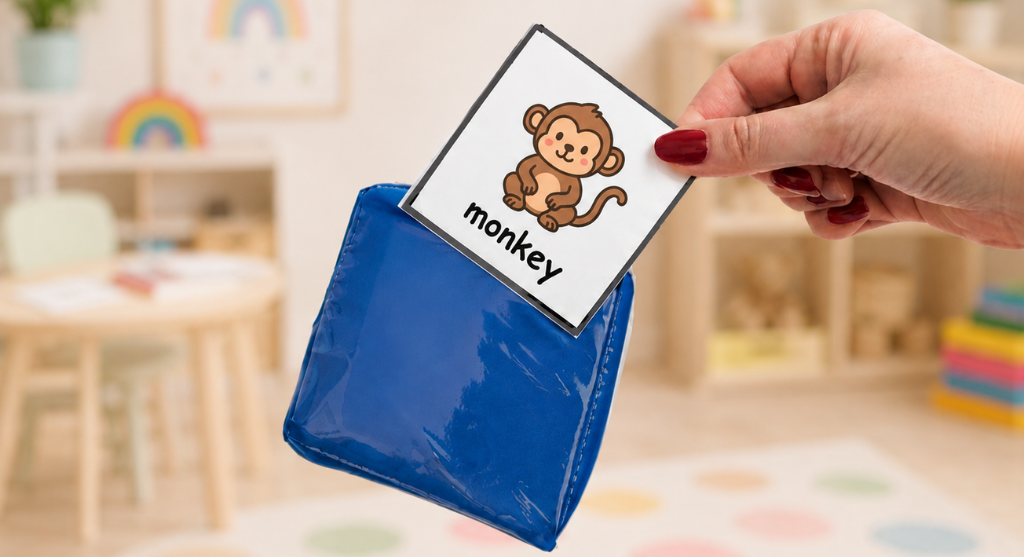
Change the pictures whenever you want and the same dice can be reused across different topics and activities.
Cards or Dice? Use What Works
The dice are optional, not a requirement. Sometimes laying several cards out together or working through them slowly will suit the activity better. At other times, rolling the dice can add movement, surprise and an extra element of play.