Screen-Free Educational Games for Kids
Educational games don’t need a screen, expensive equipment or complicated rules. Some of the simplest games can turn everyday play into opportunities for children to talk, listen, move, imagine, make choices and explore new ideas.
Drawing on more than 30 years of hands-on experience supporting children and young adults, Ali has often used simple games such as matching, sorting, memory games, role play and movement activities to make learning more interactive and enjoyable. Keeping activities relaxed, offering choices and adapting the game when interest begins to fade can help keep children involved.
Below are eight easy screen-free educational games you can try at home. Most need very little equipment, and each can be adapted around your child’s interests, age and the things you’d like to explore together.
Keep it simple: the aim isn’t to recreate a lesson at home — it’s to create opportunities to learn through play.
1 - Scavenger Hunt
Turn a simple search around the house or garden into a game. Ask your child to find objects that match a colour, shape, category or picture — for example, “Can you find something red?”, “Find something you can wear” or “Can you find something that matches this picture?”
Keep the clues appropriate to your child and start with familiar objects. As they become more confident, you can introduce describing words, categories or slightly trickier clues.
Try This: Picture Hunt
Choose a picture card and search together for the real object, something similar, or something connected to it.
You can also swap roles and let your child choose the picture and give you the challenge.
2 - Simon Says With a Twist
The familiar game of Simon Says is an easy way to combine listening, movement and language. Give simple instructions such as “Simon says touch your head”, “jump twice” or “pretend to be an elephant.”
You can change the prompts to suit whatever you’re exploring together — actions, body parts, animals, colours or everyday objects.
Movement can be particularly useful when a child is losing interest in a more stationary activity; Ali has often introduced actions, imitation and movement to change how an activity feels without necessarily changing its underlying focus.
Try This: Let Them Be Simon
Swap roles and let your child give the instructions.
Don’t worry about getting everything perfect — keep it playful and follow where they take the game.
3. Memory Matching
Place pairs of picture cards face down and take turns turning over two at a time. If they match, keep the pair; if they don’t, turn them back over and continue playing.
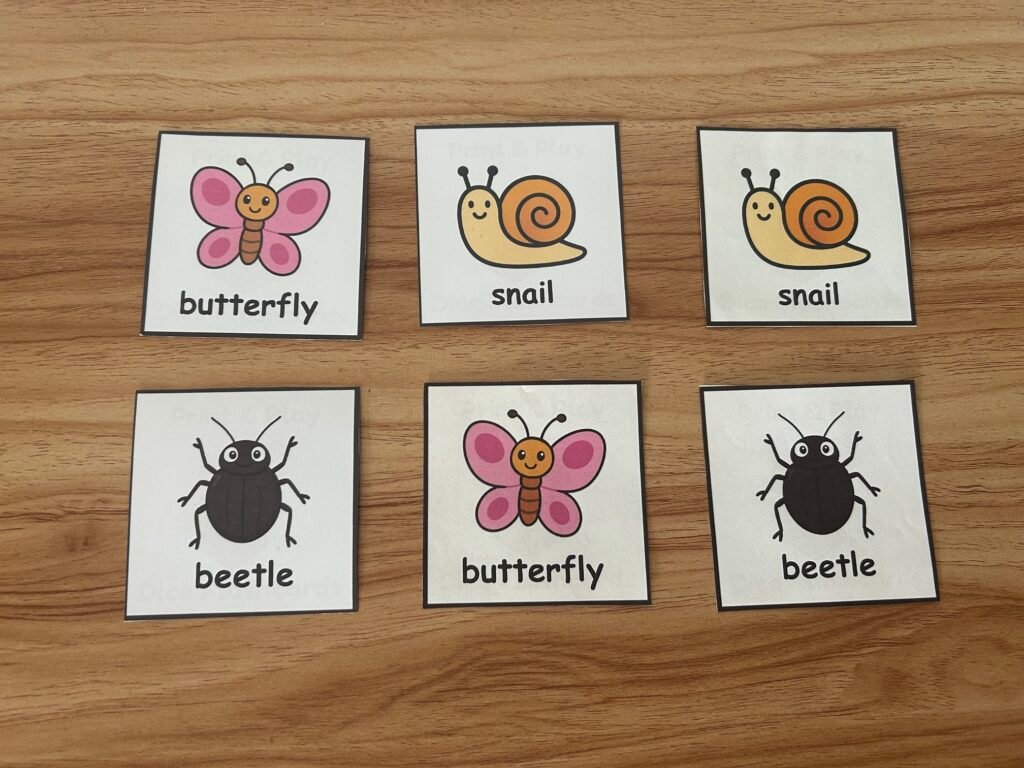
You can make the game easier by starting with just a few pairs, then gradually add more. Rather than simply finding the match, use each picture as a reason to talk — name it, describe it, make its sound, act it out or say something connected to it.
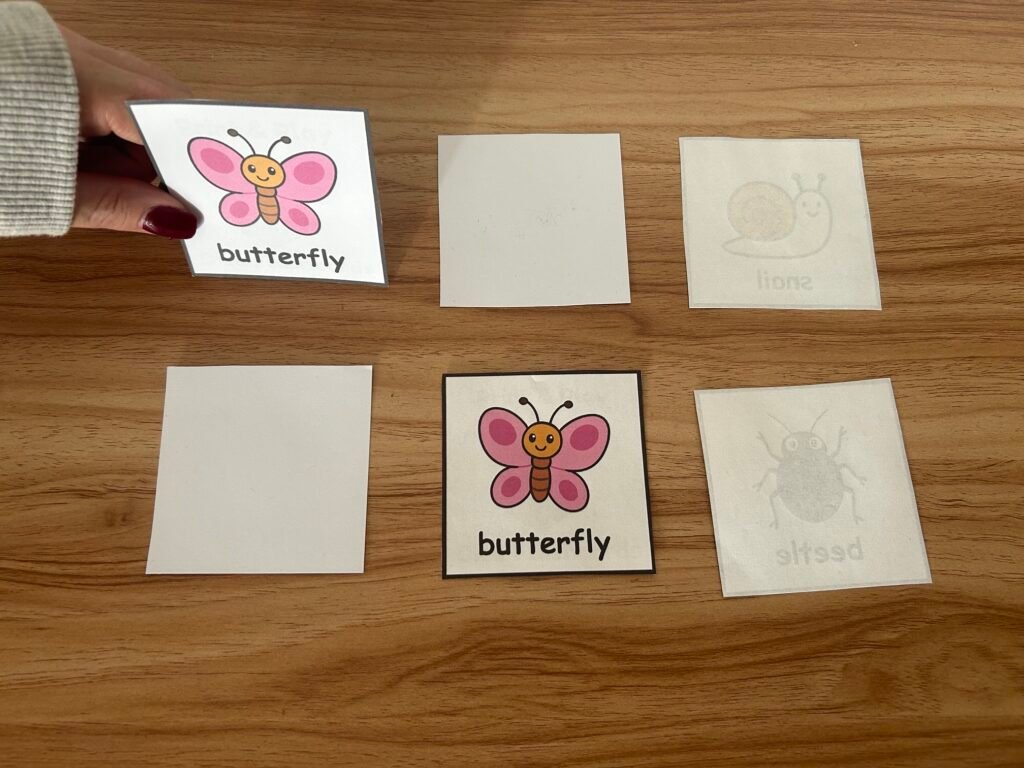
Try This: Change the Match
Matching doesn’t always have to mean two identical pictures.
Try matching an animal to where it lives, an object to its colour, or two things that belong together.
4. Role-Play Shop or Café
Turn a table, play kitchen or a few everyday objects into a pretend shop or café. Take turns being the customer and shopkeeper, choosing items, asking questions and pretending to order or pay.
Keep it as simple or imaginative as you like. You could use real food packaging, toys or picture cards as the things for sale. Follow your child’s ideas rather than worrying about playing the game in a particular way.
Ali has regularly used pretend situations such as shopping, cafés, doctors and food activities as playful starting points for interaction and conversation.
Try This: Make a Menu
Choose four or five food or drink pictures and make a simple pretend menu.
Take turns ordering from each other — then make it silly by inventing unusual combinations or prices.
5. Build a Silly Story
Choose a few pictures of people, animals, objects or places and use them to create a story together. Start with one picture and add another as the story develops — there are no right or wrong answers.
You can begin with simple questions such as “Who is this?”, “Where are they going?” or “What happens next?” If your child takes the story in an unexpected direction, follow their idea and see where it goes.
Ali has used pictures as starting points for stories and conversations, helping turn a simple image into something more imaginative and interactive. Completed – Ali Authority quest…
Try This: Three-Picture Story
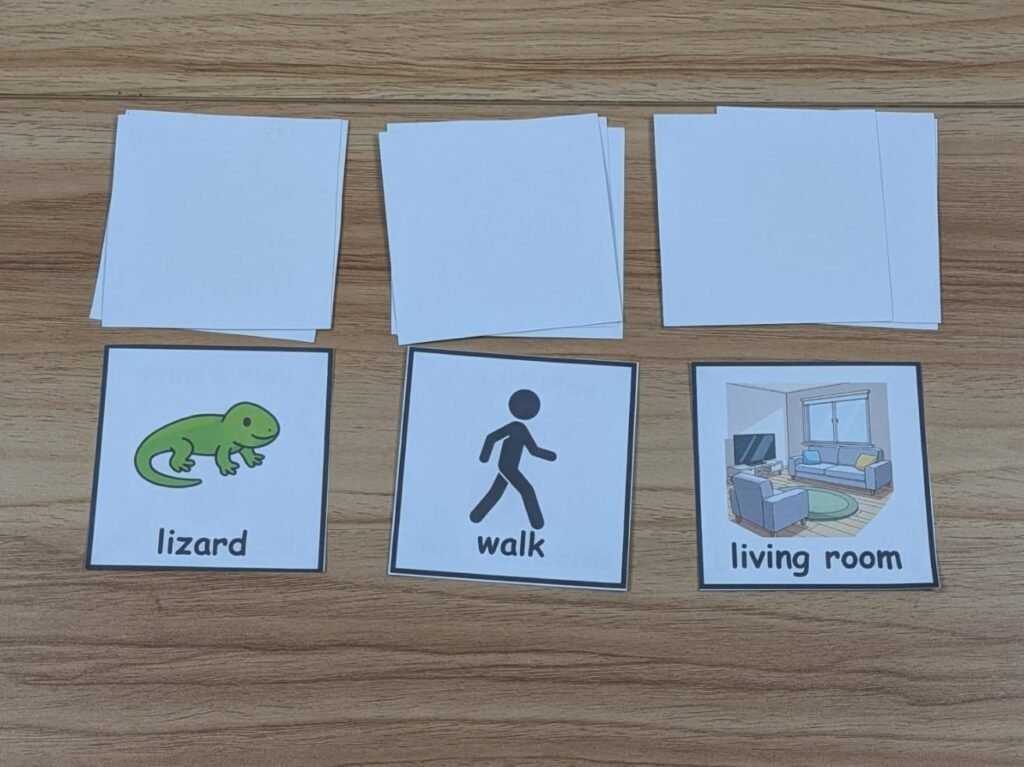
Shuffle your picture cards into different groups, choose one card from each and turn them over.
Challenge yourselves to include all three pictures in one story. The stranger the combination, the more imaginative the story can become.
6. Colour or Shape Sorting Race
Gather a small collection of toys, household objects or picture cards and choose a simple sorting challenge. You might sort things by colour, shape, type, size or where they belong.
Keep it playful by taking turns or adding some movement — place the sorting groups around the room and carry each item to the right place. Start with two clear choices and introduce more only when your child is ready.
Sorting and categorising were among the simple activities Ali regularly used with pictures and objects, with the activity adapted according to the individual child and what they were exploring.
Try This: Beat Your Own Time
Once everything is sorted, mix it up and try again.
Rather than competing against each other, see whether you can complete the challenge together before the timer runs out.
7. Musical Freeze & Move
Put on some music and let everyone move, dance or act however they like. When the music stops, freeze! Add simple prompts between rounds such as “move like an animal”, “show me a happy face”, “walk slowly” or “pretend you’re really cold.”
You can adapt the prompts around whatever your child is interested in — animals, actions, emotions, body parts or imaginative characters. The emphasis is on joining in and having fun rather than performing anything perfectly.
Ali has often combined movement, actions, imitation and sounds with other activities to make the experience more active and playful.
Try This: Pick the Next Move
Let your child choose the next action or picture prompt. If they invent their own movement, everyone else has to copy it.
8. Pick or Roll, Reveal & Play
Shuffle a small selection of picture cards and place them face down. Take turns choosing a card at random, turn it over and use whichever picture appears as the next prompt.
Depending on the picture, you could name it, describe it, make its sound, perform an action, answer a question or add something to a story. Put the card back, choose another, or change the challenge each round.
Add Foam Dice for Extra Excitement
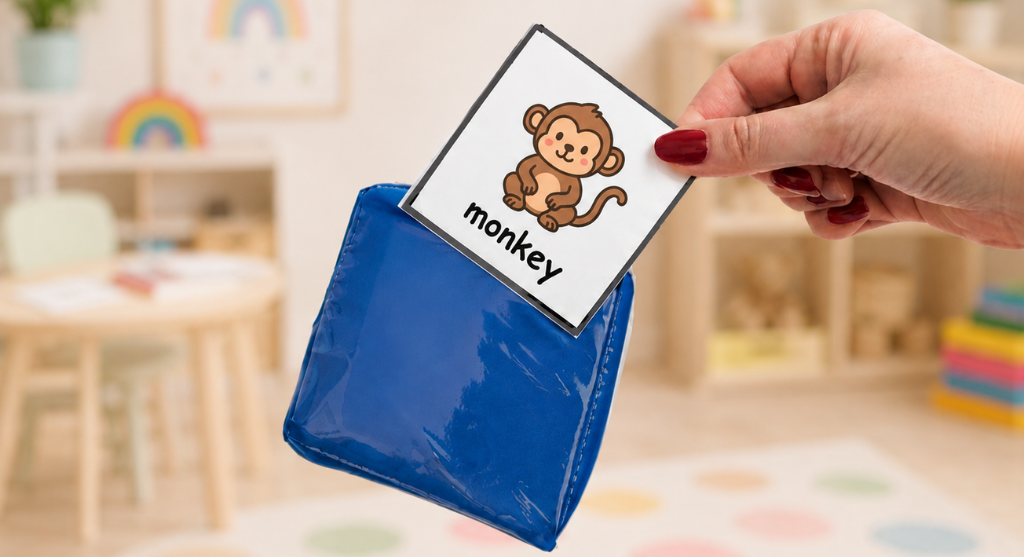
If you have a foam pocket dice, slide six pictures into the clear pockets instead. Rather than choosing a card, roll the dice and let whichever picture lands on top decide what happens next.
The activity is essentially the same, but the roll adds movement, anticipation and unpredictability. Ali found that adding the dice could make a familiar picture-card activity feel more exciting and give the child a more active role in discovering what comes next.
Try This: Let Chance Decide
Choose six pictures around one theme — such as animals, actions or emotions.
Either pick a card at random or roll the dice, then make up a challenge for whichever picture appears. Repeat and see what comes next.
Keep the Game Going
One of the simplest ways to keep an activity interesting is to change the way you play without necessarily changing what you’re exploring. The same pictures can be used for matching one day, storytelling another, movement games another time, or simply as conversation prompts.
Ali has found that familiar resources can be reused in many different ways — helping keep preparation manageable while giving children variety in how they interact and play. Completed
You don’t always need a new activity – sometimes you just need a new way to play.
Ready to Try Some of These Games?
Dice Flashcards has 650+ printable flashcards across 40+ themed packs, covering everything from animals, actions and emotions to colours, shapes, food and everyday topics.
Use the cards on their own with the games above, or add our foam pocket dice when you want to bring movement, anticipation and extra excitement into play.
Every full individual flashcard pack also includes 10 FREE activity ideas plus a FREE blank template, giving you even more ways to use the pictures.
FREE Starter Pack
Not sure where to start? Try it for FREE.
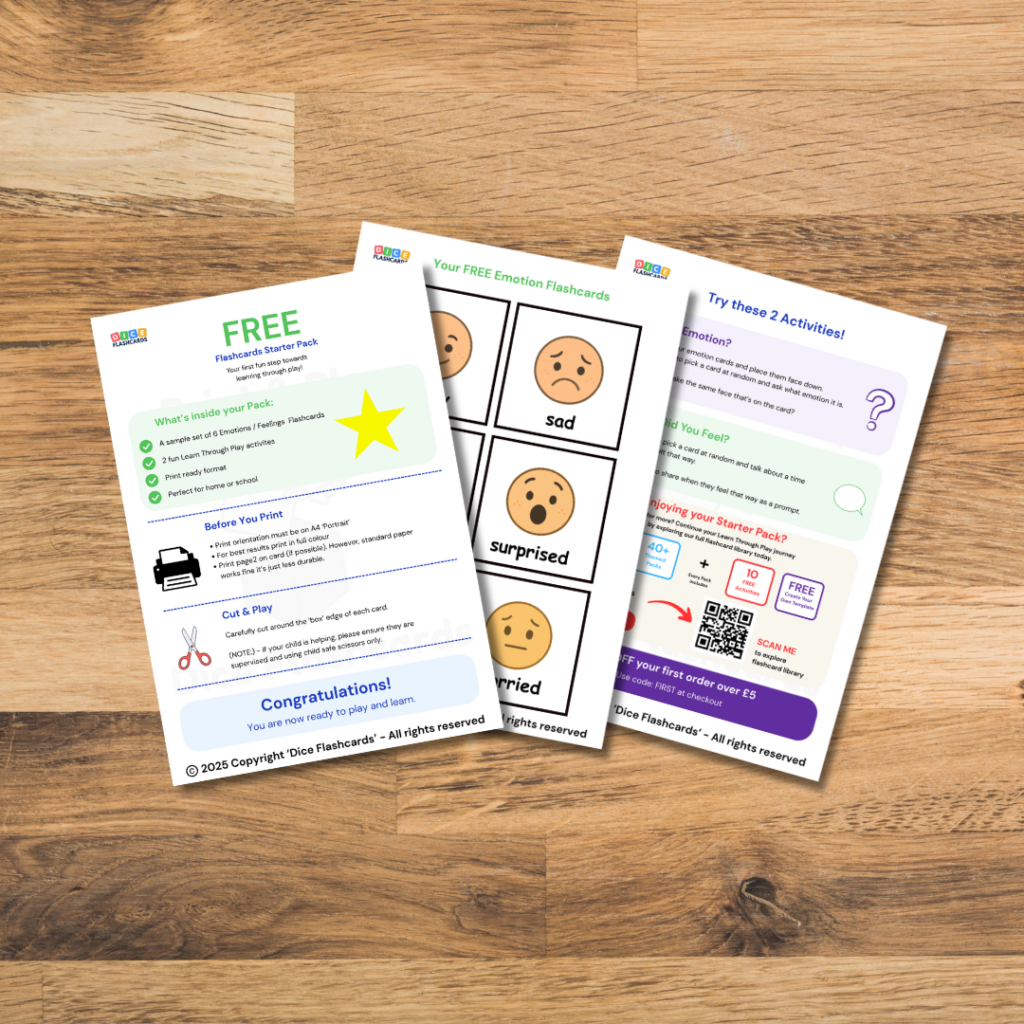
Download our FREE Starter Pack containing 6 printable Emotions & Feelings flashcards + 2 activity ideas and try some of the games you’ve just discovered.