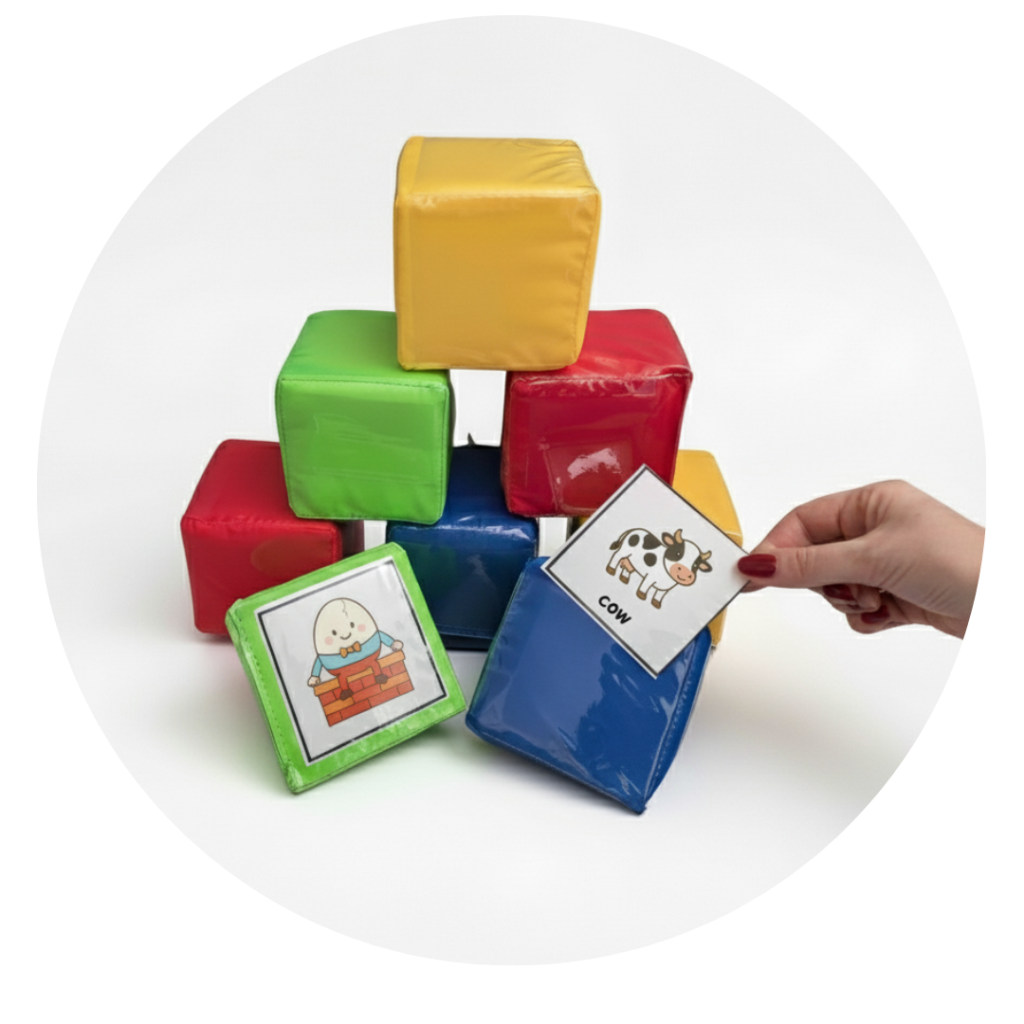
Learning doesn’t have to be boring — with dice and flashcards, learning can become a fun, interactive game for everyone, regardless of your setting, whether that’s at home or within a setting. By adding a simple roll of the dice, children and adults can turn practice into a playful challenge that keeps them engaged, motivated, and excited to learn.
1. Understand Individual Needs Thoroughly
- Gather information from assessments, teachers, therapists, or family.
- Be aware of specific difficulties (e.g., speech, language, memory, processing, attention).
- Tailor activities to cognitive levels rather than age alone.
2. Use Clear, Simple Communication
- Use short, concrete sentences.
- Repeat and rephrase key points.
- Pair verbal instructions with visual cues (pictures, symbols, gestures).
- Confirm understanding by asking the learner to repeat instructions in their own words.
3. Break Tasks Into Manageable Steps
- Present one instruction at a time.
- Use checklists, visual timetables, or step-by-step guides.
- Celebrate completion of each step to build confidence.
4. Make Learning Multisensory
- Combine visual, auditory, and tactile learning.
- Use physical objects, manipulatives, or interactive technology.
- Incorporate movement where possible to maintain engagement.
5. Encourage Active Participation
- Offer choices to empower learners.
- Include collaborative or paired activities.
- Use games, role-play, or real-life simulations to reinforce concepts.
6. Provide Consistency and Predictability
- Use routines to reduce anxiety.
- Keep learning spaces organized and free from distractions.
- Maintain consistent language and symbols for instructions.
7. Foster Communication Skills
- Encourage use of AAC (augmentative and alternative communication) devices if needed.
- Model vocabulary and sentence structures.
- Be patient, give processing time, and avoid finishing sentences for the learner.
8. Promote Understanding Through Repetition and Practice
- Repeat key concepts in different ways.
- Reinforce learning through real-life contexts.
- Review prior learning before introducing new material.
9. Support Emotional Wellbeing
- Respond positively to attempts at communication.
- Recognise frustration; provide breaks when needed.
10. Collaborate With Families and Professionals
- Involve caregivers, therapists, or support workers in planning.
- Share strategies to reinforce learning across settings.
- Seek guidance from speech and language therapists, occupational therapists, or educational psychologists.
Dice flashcard games make learning both fun and effective. Whether it’s answering questions, acting out answers, or competing with peers in a setting or family members at home, this simple game approach adds variety, movement, and motivation. With just a set of flashcards and a foam pocket dice, learning becomes an enjoyable activity everyone can look forward to.